Introduction
Hospital floors must withstand heavy foot traffic, equipment loads, frequent cleaning and disinfection, moisture, and demanding hygiene conditions. Therefore, choosing the right flooring is essential for maintaining hygiene, safety, durability, and ease of maintenance. This guide explains the key factors to consider when selecting hospital flooring, compares flooring options for different hospital areas, outlines what to confirm when sourcing hospital flooring, and provides practical guidance on choosing a reliable hospital flooring supplier.

Key Factors to Consider When Choosing Hospital Flooring
When selecting hospital flooring, you should consider both its performance and suitability for the intended application. Key factors include:
1.1 Hygiene & Cleanability

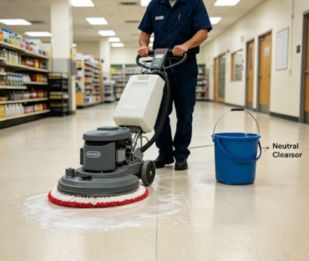
Hospital flooring is cleaned and disinfected frequently, so the surface should be smooth, easy to clean, and designed to minimize areas where dirt and contaminants can accumulate. In healthcare settings, easy-to-maintain flooring supports efficient cleaning and overall hygiene management. When selecting flooring, consider how easily the surface can be cleaned and whether it is compatible with the cleaning and disinfecting products used in the facility.
1.2 Durability & Load Capacity

Hospital floors are exposed to constant foot traffic and repeated loads from beds, wheelchairs, trolleys, and other medical equipment. The flooring should therefore provide good wear resistance and load-bearing capacity. Since traffic levels vary by area, buyers should select products based on the expected frequency of use and equipment loads rather than judging durability by appearance or price alone.
1.3 Slip Resistance

Hospital environments may be exposed to water, cleaning solutions, and other liquids, making slip resistance an important factor in protecting patients, healthcare staff, and visitors. It is particularly important in restrooms, entrances, and other areas where moisture or liquid spills are more likely to occur. Flooring should be evaluated based on the conditions of each area and the relevant slip-resistance testing standards.
1.4 Chemical & Disinfectant Resistance

Hospital vinyl flooring is regularly exposed to cleaning agents and disinfectants, while some areas may also come into contact with pharmaceuticals or other chemicals. Flooring should therefore offer chemical resistance appropriate to the intended application. Rather than relying solely on a "chemical resistant" label, buyers should confirm compatibility with the cleaning and disinfecting products used in the facility and review the manufacturer's test data or compatibility information.
1.5 Seams & Installation

The hygiene performance of healthcare flooring depends not only on the material itself but also on the installation method and seam treatment. In areas with stringent hygiene requirements, buyers should consider how well floor seams can be sealed and how easily floor-to-wall connections, edge details, and transitions between different materials can be cleaned and maintained. For sheet flooring, heat-welded seams and suitable wall coving can help minimize exposed joints and areas where dirt can accumulate.
1.6 Maintenance & Lifecycle Cost

Hospital flooring is a long-term investment, so the initial purchase price is only part of the overall cost. Buyers should also consider routine cleaning methods, maintenance frequency, ease of repair, and expected service life. Flooring that is easy to clean, wear-resistant, and relatively low-maintenance may provide better long-term value. For this reason, flooring should be evaluated over its entire service life rather than based on the initial purchase price alone.
Choosing Flooring for Different Hospital Areas
Different hospital areas have different flooring requirements. Consider the specific conditions of each space when making a hospital flooring selection.
|
Hospital Area |
Key Flooring Requirements |
Common Flooring Options |
|
Patient Rooms & Wards |
Hygiene, easy cleaning, comfort, durability |
Homogeneous vinyl, heterogeneous vinyl, rubber |
|
Corridors & High-Traffic Areas |
High wear resistance, rolling-load resistance, easy maintenance |
Homogeneous vinyl, rubber, safety vinyl |
|
Operating Rooms & Critical Care Areas |
Hygiene, easy cleaning, chemical resistance, static control where required |
ESD/conductive vinyl, homogeneous vinyl, rubber |
|
Laboratories & Technical Areas |
Chemical resistance, hygiene, static control where required, durability |
ESD vinyl, homogeneous vinyl, epoxy resin |
|
Emergency & Treatment Areas |
Heavy traffic, impact resistance, easy cleaning, durability |
Homogeneous vinyl, heterogeneous vinyl, rubber |
|
Reception, Waiting & Public Areas |
Durability, appearance, easy maintenance, comfort |
Heterogeneous vinyl, homogeneous vinyl, LVT, rubber |
|
Rehabilitation & Therapy Areas |
Resilience, comfort, impact absorption, movement safety |
Rubber, sports/dance flooring, resilient vinyl |
|
Restrooms & Wet Areas |
Slip resistance, moisture resistance, easy cleaning |
Safety vinyl, rubber, ceramic tile |
As the table shows, homogeneous vinyl flooring is suitable for a wide range of healthcare areas, particularly where durability, easy maintenance, hygiene, and resistance to frequent cleaning are required.
Why Homogeneous Vinyl Flooring Is Commonly Used in Healthcare Facilities
Homogeneous PVC flooring is well suited to healthcare environments, combining a through-body construction, sheet format, and installation characteristics that support a range of medical applications.
3.1 Through-Body Construction

The material and color of homogeneous PVC flooring run consistently through the full thickness of the product, rather than relying on a separate decorative surface layer. This through-body construction provides consistent material and color characteristics from the surface through to the base, making it well suited to flooring applications where long-term consistency is required.
3.2 Sheet Format for Large-Area Installation

Homogeneous PVC flooring is typically supplied in sheet rolls, making it suitable for large-area installations such as wards, corridors, and treatment areas. Compared with smaller flooring units, sheet flooring requires fewer material-to-material connections across the installation area, allowing for a more continuous floor layout and more efficient installation planning.
3.3 Heat-Welded Seams & Wall Coving

After installation, seams between homogeneous PVC sheets can be heat-welded to create a continuous, secure connection between adjacent sheets. Where enhanced floor-to-wall detailing is required, wall coving and suitable edge finishing can also be incorporated to provide a more integrated transition between the floor and wall.
Featured Homogeneous Vinyl Flooring


What to Confirm When Sourcing Hospital Flooring
Before sourcing healthcare flooring, you should confirm that the product specifications, performance, installation requirements, and supply conditions align with the project. Clear requirements at the sourcing stage help ensure the right product is selected and delivered as specified.
Product Specifications
Confirm key specifications such as thickness, sheet dimensions, colors, and roll format, and make sure they match the intended application and project requirements.
01
Performance & Compliance
Verify the required performance and ask the supplier for technical data sheets, test reports, and relevant compliance documentation to support product selection and project approval.
02
Installation Requirements
Confirm subfloor conditions, adhesive compatibility, seam welding, wall coving, and edge finishing requirements before installation to ensure the flooring system is properly specified.
03
Samples & Supply
For bulk orders, confirm samples, color consistency, required quantities, lead times, and delivery arrangements to ensure the supplier can meet the project's schedule and supply requirements.
04
How to Choose the Right Hospital Flooring Supplier
When selecting a hospital flooring supplier, look beyond the product itself and evaluate the supplier's manufacturing capabilities, quality control, and technical support to ensure they can meet your project requirements.
• Manufacturing Capability
Evaluate the medical flooring supplier's production capacity, product range, and ability to handle bulk and project-based orders. This helps ensure they can support your current project and future purchasing needs.
• Quality & Testing
Check whether the supplier has an established quality control system and can provide relevant test reports, technical data, and quality documentation to support product evaluation and project approval.
• Product & Technical Support
Choose a supplier that can provide product samples, technical documentation, and installation guidance to support product selection, technical review, and project implementation.

Why Choose Xinkailin as Your Hospital Flooring Supplier
As a professional hospital flooring manufacturer and supplier in China, Xinkailin combines direct factory supply, controlled quality, and comprehensive customer support to meet project requirements worldwide.
Direct Factory Supply
With 4 facilities, 10+ production lines, and an annual capacity of 20 million m², we support bulk and project orders with stable supply and faster shipment.
Quality from Material to Finished Product
We control quality from raw materials and formulation through final inspection. Virgin PVC, DOTP plasticizer, and relevant compliance documentation support consistent quality.
Customer Service & Support
We offer full-service support to global customers, from product selection and samples to customization, technical documentation, on-time delivery, and after-sales service.

Conclusion
Choosing the right hospital flooring requires careful consideration of the application, performance requirements, installation, and supply conditions. We hope this guide helps you make a more informed decision when evaluating hospital flooring products and suppliers.
If you are sourcing flooring for healthcare facilities, contact our team with your application, required specifications, quantity, and target market. We can recommend suitable flooring solutions and provide free samples and technical support for you!